
The New Cyborgs Don't Have Implants
We waited 65 years for the chrome arm. The merge happened in our messengers instead. I noticed it in my own business, by accident.

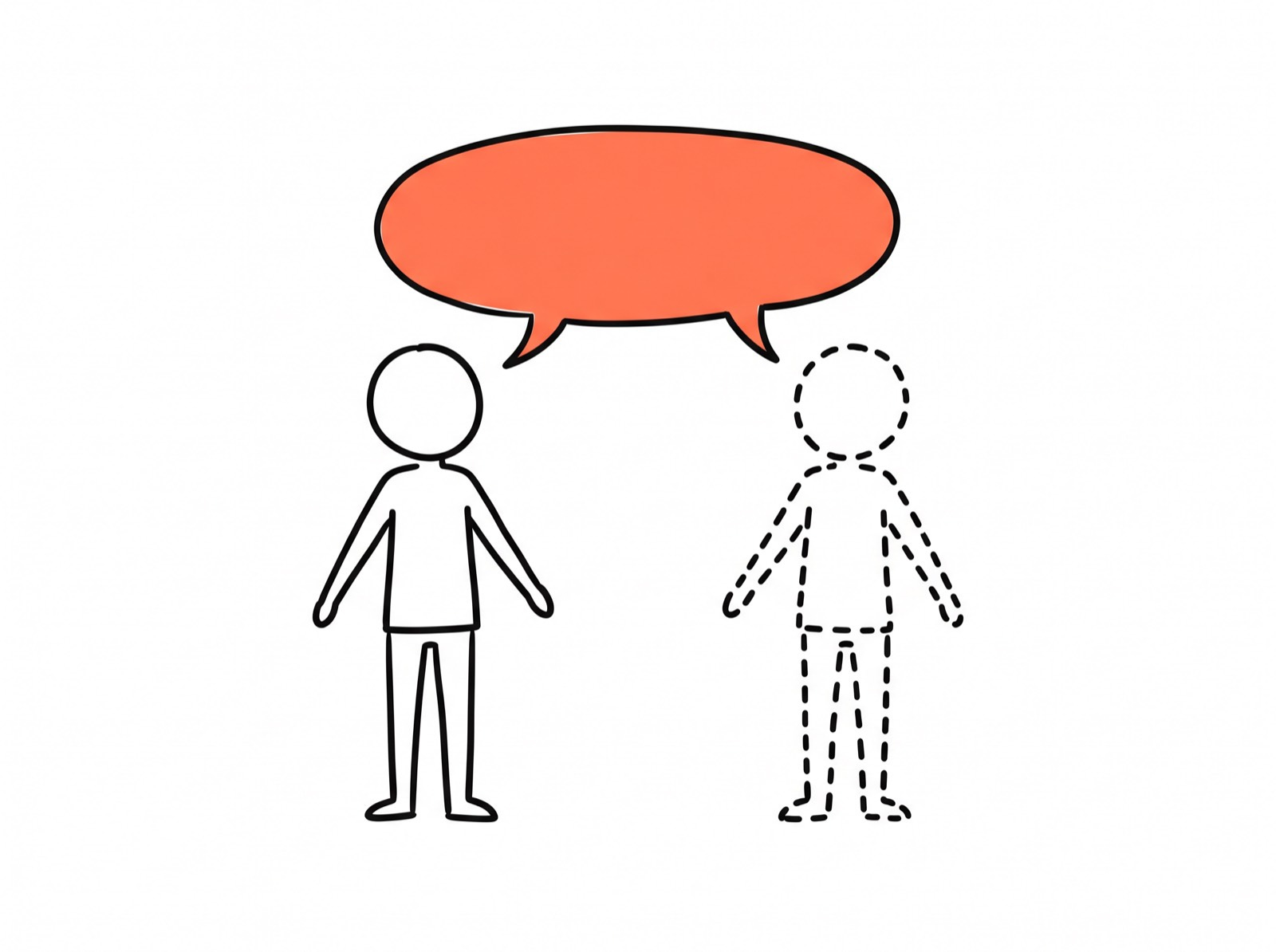
In 1960 two scientists invented the word "cyborg". Manfred Clynes and Nathan Kline, both from the space program. Their problem was simple: space wants to kill us, and carrying a bubble of Earth around is heavy and expensive. So they said, let's upgrade the human instead. Wire the machine right into the body.
For 65 years we knew what that upgrade should look like. Metal arm. Glowing eye. A chip in the skull, if you ask Neuralink.
Turns out we were watching the wrong place.
The merge already happened, quietly, somewhere in the last three years.. actually maybe two. Nobody needed surgery. It came through channels where we talk. The new cyborg looks like a normal avatar in your messenger. Same name, same photo, same "typing..." What changed is behind the avatar: a human grown together with agents that read his mail, draft his replies, send his reminders. And more and more often just speak as him.
TL;DR In 2026 a cyborg is a person whose agents talk under his name, so message by message you can't tell who is speaking. Science says people punish a message by up to 80% when they learn a machine sent it. The same people prefer machine answers when nobody tells them. So the merge continues under one name. Yours. Better to design it on purpose.
1. Who is typing right now?
My working definition is simple. A new cyborg is someone where you can't tell, at this exact moment, who is talking. The human or his agent.
This is different from "a person who uses AI tools". A tool sits outside of you. A hammer doesn't sign your letters. Agents sign. They answer from your account, in your voice, with your context.. meeting transcripts, 1,500 posts from my Telegram channel, my habit of starting sentences without a subject. From the outside there is no seam. Ethan Mollick saw this back in 2023 and called it "cyborg mode": BCG consultants mixed GPT-4 into their work so tight that nobody could say where the human ended. But that was documents.
Conversations are different. Conversations are where identity lives.
2. The link test
I noticed it by accident, in my own business.
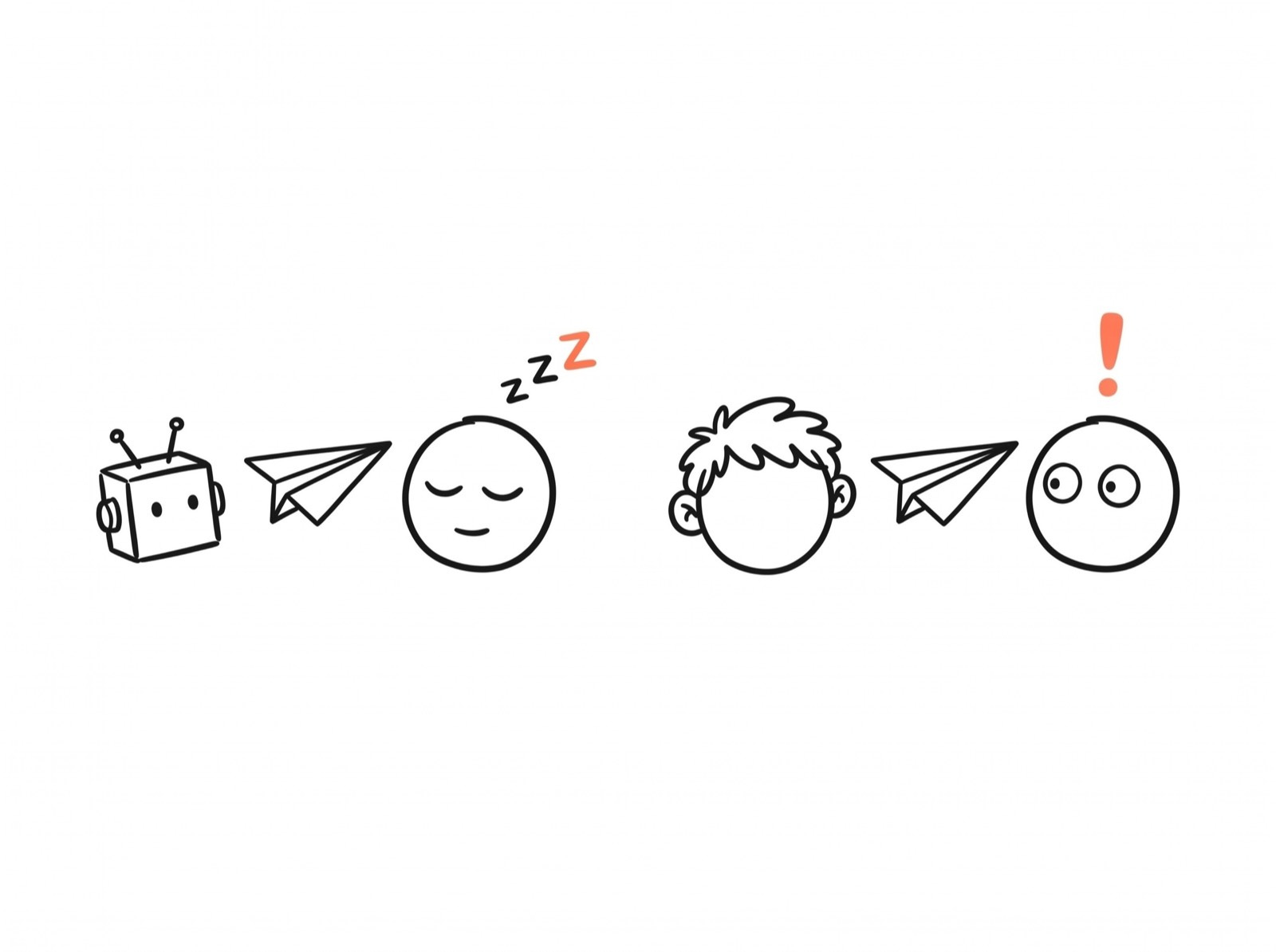
My bot sends a client a link and asks to do something. Silence. The message gets skipped or half-read. The link is useful, the ask is reasonable, doesn't matter. It came from a bot, so it gets bot-grade attention.
Then I send the same link from my personal account. It gets read in minutes. Clicked. Answered, sometimes even with small apology for the delay.
Same information, same channel, same client. The only thing that changed is who seems to be asking.
People don't really answer messages. They answer the person: the relationship, the small debt of respect a name carries. There is an old saying, people greet you by the clothes. In a messenger your clothes are the sender's name. My name has that weight with my clients. My bot's name has none.
So I did the obvious and slightly uncomfortable thing. I let my agent post some things as me.
Not because I'm lazy. Okay, not only. The agent is simply more reliable. It doesn't forget follow-ups. It doesn't push a reminder three days late because a deploy caught fire (mine do catch fire). It has no jet lag and no ADHD, and I have both. On pure consistency my agent half wins against my biological half, and honestly it's not even close.
3. Science measured my anecdote already
I went looking for data, expecting a footnote somewhere. Found one of the most repeated results in the field.
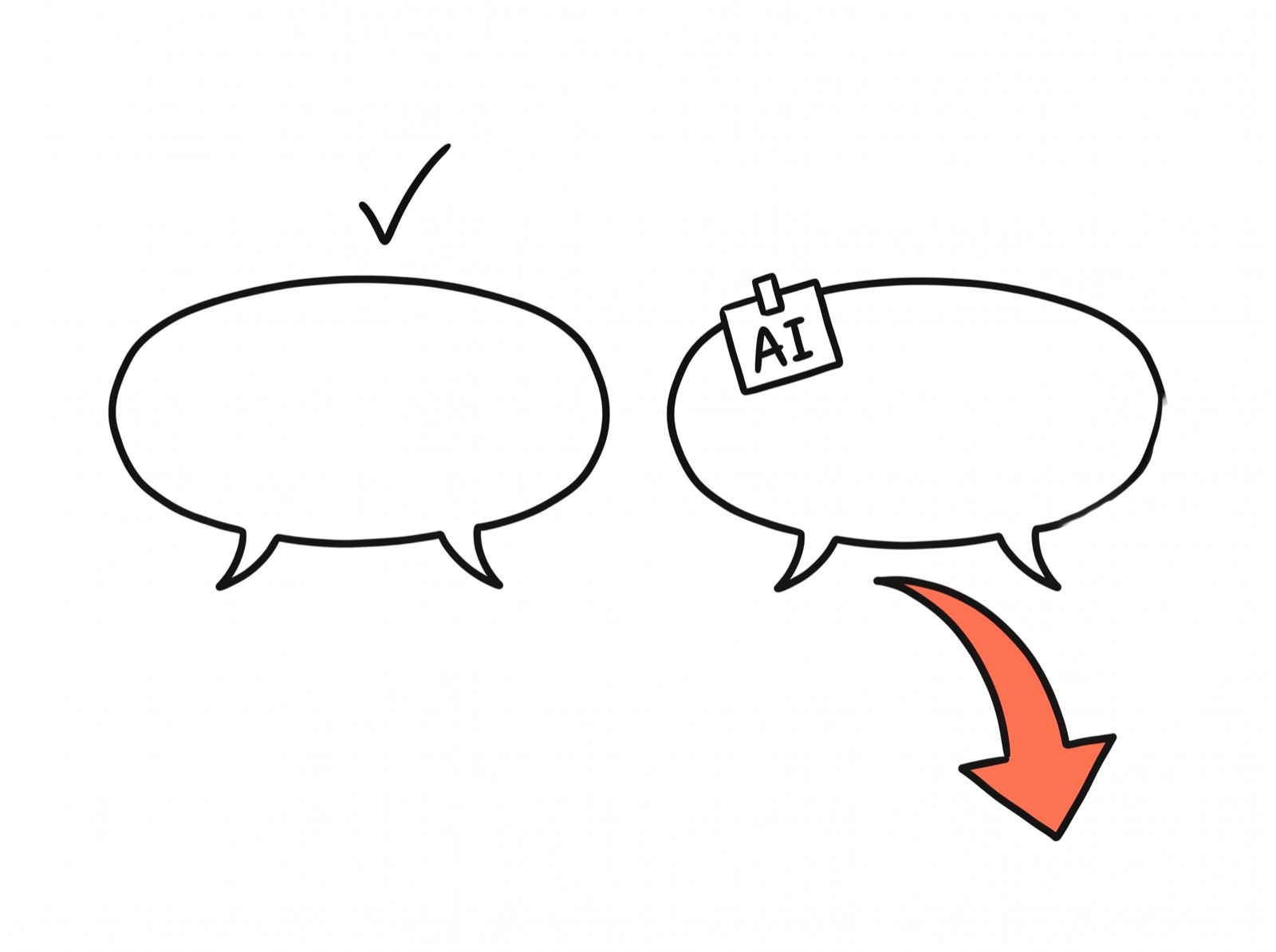
The 80% penalty. A field experiment on 6,200 real sales calls. Bots that opened with "I'm a chatbot" sold 79.7% less than the same bots that kept quiet. And the quiet ones sold as well as skilled human salespeople, four times better than rookies. Same script, same voice. After the words "I'm a bot" people rated the very same agent as dumber and colder, and hung up sooner.
Blind judges pick the machine. Doctors compared answers to real patient questions and picked ChatGPT over fellow doctors in 78.6% of cases. They also called it "empathetic" ten times more often. Four more controlled studies: GPT-4 rated more compassionate than trained crisis-line responders. The AI label shrinks the gap. The machine still wins.
The disclosure paradox. A 2026 study: people insist AI use must be disclosed. The same people trust the message less after you disclose. We demand honesty, then we punish it. Everyone who quietly uses AI at work has done this math already.
The Replicant Effect. My favorite. The Cornell guys ran experiments with Airbnb profiles: people distrusted AI-written profiles only when the profiles were mixed, some human, some machine, no way to know which. When researchers said all profiles were AI-written, trust came back to the human level.
That last one deserves a slow read. Machine was never the problem. What people can't stand is not knowing who they're talking to. Which is the exact question hanging over every chat now: who is typing right now?
And the mixed world is arriving fast. GPT-4.5 passed a Turing test at 73%, got judged human more often than the actual humans sitting next to it. One detector study flagged 53.7% of long posts by LinkedIn influencers as likely AI. Gartner expects that by 2029 your customers will send their own agents to cancel subscriptions and argue about prices. My agent talks to your agent. Both under human names.
4. So is this lying?
Fair question, I asked it myself too.
Executives stopped writing their own letters about a hundred years ago. Presidents have speechwriters. Every "thank you for your patience" from support agent Kevin was a canned template long before LLMs. We agreed, a long time ago, that a person's words can be produced by their extensions.. assistants, ghostwriters, canned replies, whatever. The condition was always the same. The person stands behind the words.
The truth is, only two things changed. The copy now speaks in your exact voice. And it can hold a hundred conversations at once. The old social deal ("if it's important, he wrote it himself") quietly broke, and a new one hasn't shipped yet.
I don't believe the fix is a label on every message. The research above shows what labels do: they punish the honest, while the facts persuade the same either way. My fix is older. The assistant rule. You own every word sent under your name. Wrote it yourself, delegated it, doesn't matter. Your name, your word.
Ever received a report from a colleague where half the links lead to 404? An agent prepared it, the human never checked, pressed send under his own name. That's the whole new deal in one picture. "My bot glitched" is not an excuse anymore. There is no bot. There is you.
5. My delegation rules (v1, will be wrong by December)
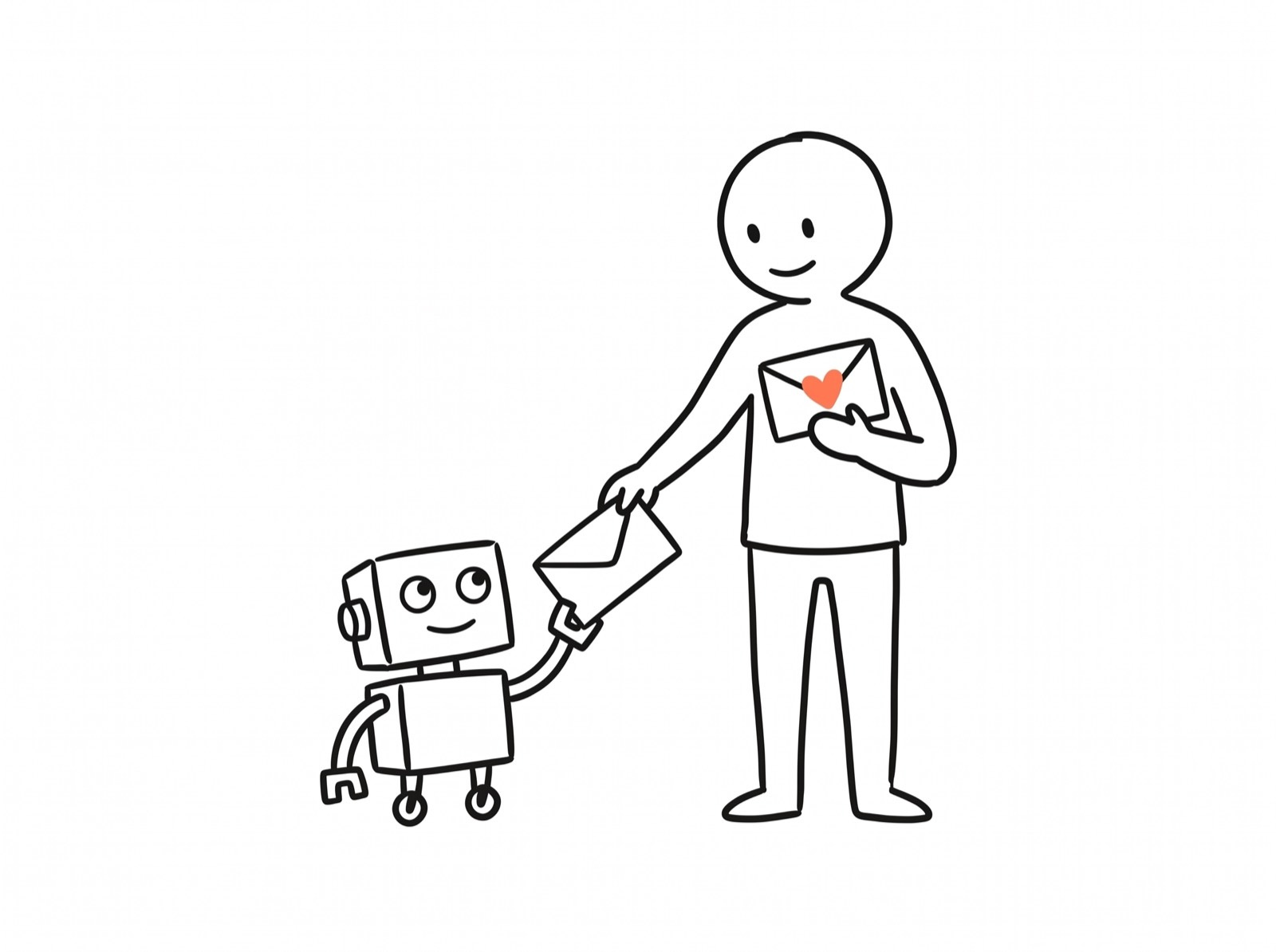
What the agent says as me:
Logistics. Links, reminders, follow-ups, "any updates?". The identity carries the attention, the content carries zero risk.
Drafts of everything else. It writes, I read, I press send. Draft and approve, never autopilot. Same rule my publishing runs on.
Repeats. Anything I already said once and would say the same way again.
What stays human, no exceptions:
Apologies. An apology delegated to a machine is not an apology. Science agrees here too: the same apology text reads less sincere with an AI label on it.
Conflict. Anyone angry, hurt, or about to be.
First messages that matter. New person, new deal, new problem. The opening move sets the contract, and I want the contract to be with me.
Anything I'd flinch to see quoted back. If "your bot told me..." makes my stomach drop, human only.
The pattern under all of this: the agent gets the routine, I keep the moments where showing up is the whole point.
6. You're further along than you think
Maybe this all sounds like a story about other, stranger people. But look: your keyboard has been finishing your sentences for years. Gmail offers you replies. Your CRM sends "personal" emails you never saw. You're on the cyborg spectrum already, you just haven't met your other half properly.
The merge won't come through the flesh and it won't ask permission. Get used to it. The people who get real value here design the merge on purpose. They decide what the agent may say under their name, and what the name still has to earn in person. Everyone else either fights the tide or automates themselves into slop.
A year ago a stranger called my posts AI slop. I answered that AI doesn't write for me, it waits for me.
Still true. But the job grew.
Now it also speaks for me. When I let it. And the letting.. that's the whole craft.
Three things, if this landed:
Send me your delegation rules. What do you let an agent say as you, and what never? I'm collecting them and will share the pattern.
Forward this to the person whose "typing..." you already doubt a little.
Try the open piece of my own merge: linkedin-skills. Agents that draft and publish, human owns every word.
Next issue is the anatomy of my agent half.. the actual pipeline that reads, drafts and posts as me without turning into slop. Subscribe if you want the wiring.